
Africa Must Stop Being Only a Consumer of Technology. Picture a young African...
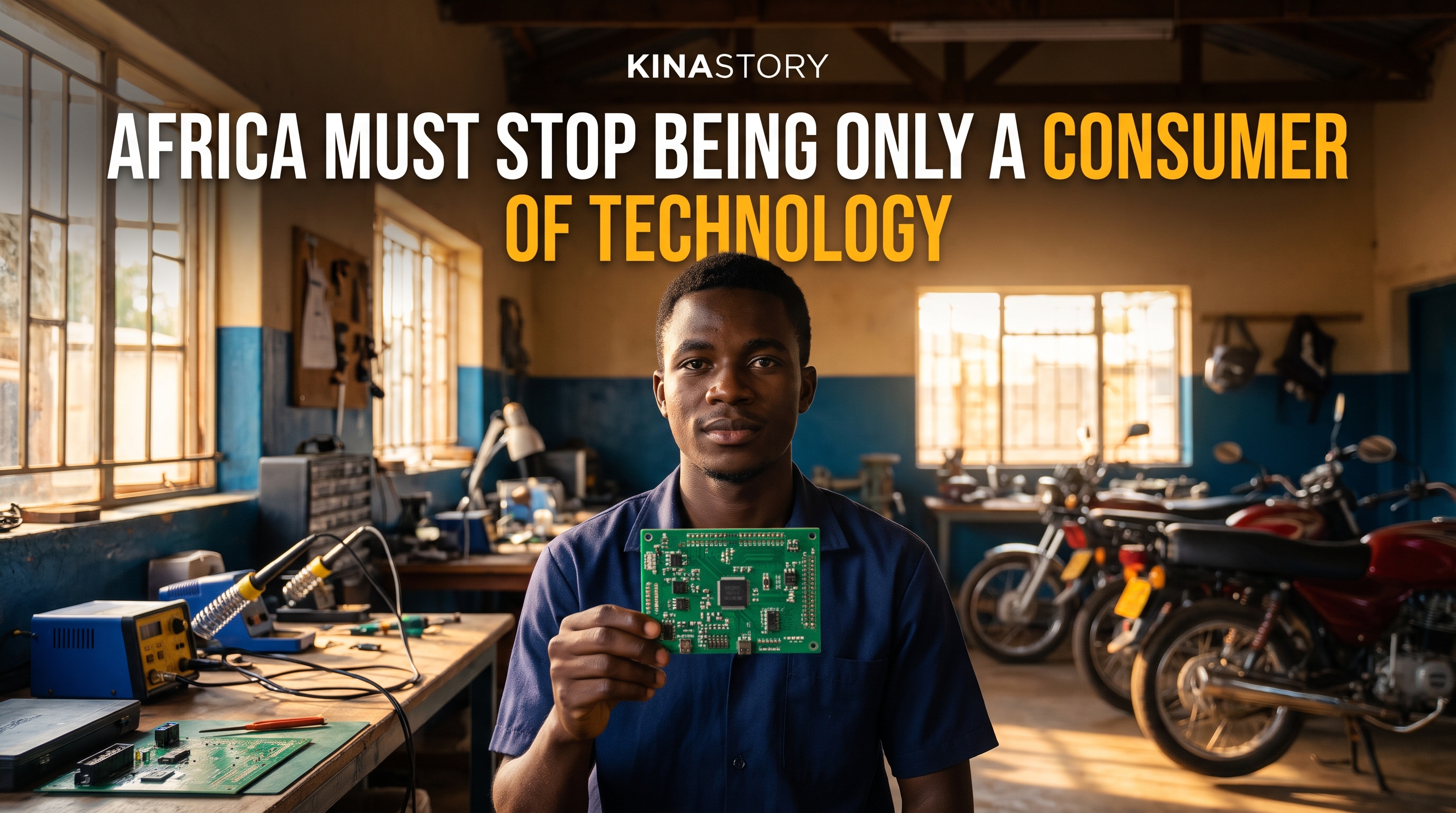
Africa Must Stop Being Only a Consumer of Technology. Picture a young African engineer who refuses to settle for simply importing electronics. Instead, he dreams of designing the semiconductors inside them. Armed with relentless curiosity, free online resources, and grit, he dives into microcontrollers. After years of late-night experimentation, he builds an affordable electronic controller for motorcycles. His first prototype fails. He goes back to the drawing board, refines the design, and tries again. Eventually, he creates a product reliable enough to attract major motorcycle manufacturers and distributors. What started as a bedroom research project becomes a thriving tech enterprise. Yet, the true victory isn’t just commercial success—it’s proof of concept. It proves that African engineers can build deep-tech hardware that solves real industrial problems. The blueprint for Africa’s tech independence: Stop waiting for tech transfer: Master the science and build it locally. Prioritize R&D early: Innovation doesn't require billions to start—just curiosity and persistence. Bridge theory and industry: Turn academic knowledge into practical, market-ready hardware. Invest in local talent: Build domestic engineering teams and assembly capabilities. Iterate and scale: Start small, survive the failed prototypes, refine, and compete globally. Africa doesn't need to build the world's largest semiconductor fab overnight. We can start right now by designing components, programming microcontrollers, fabricating PCBs, and engineering world-class products. The future doesn't belong to the nations that merely buy technology. It belongs to the ones that create it. What if the next global semiconductor giant is born in Africa? 🌍⚡ #Kinastory #AfricanInnovation #Semiconductors #DeepTech #Engineering #MadeInAfrica #TechInAfrica Option 2: Storytelling & Visionary (Best for long-form blog posts or Kinastory features) Adds emotional depth and elevates the narrative arc to feel more cinematic and inspiring. From Consumers to Creators: Africa’s Next Tech Frontier Imagine a young boy in Africa looking at a smartphone or a motorcycle—not just wondering how to use it, but how to design the silicon chips that bring it to life. Instead of waiting for opportunities to arrive, he creates his own. Using free online courses, second-hand components, and sheer determination, he teaches himself electronics and microcontroller architecture. Months turn into years of trial and error until he develops a cost-effective electronic controller tailored for local motorcycles. The first prototype fails. Rather than quitting, he treats failure as data. He re-engineers the circuit, tests it under harsh conditions, and perfects it. Soon, regional manufacturers and distributors take notice. A small, self-funded research project evolves into a scalable hardware company. This story is about more than just selling motorcycle parts. It is a blueprint for what happens when African engineers shift from maintaining imported tech to inventing original hardware. 5 Lessons for Building Africa’s Hardware Ecosystem: Own the creation process: Don't wait for foreign companies to bring solutions—develop them from the ground up. Embrace grassroots R&D: Groundbreaking engineering starts with resourceful experimentation, even on a tight budget. Commercialize science: Focus on turning technical knowledge into tangible products that solve everyday industrial bottlenecks. Build local supply chains: Nurture domestic engineering teams and local manufacturing capabilities. Think global from day one: Start small, iterate relentlessly, and build to international quality standards. We don't need to build a multi-billion-dollar semiconductor foundry tomorrow to enter the race. The journey begins today—by designing custom components, developing microcontrollers, assembling circuit boards, and proving our engineering excellence to the world. History remembers the builders, not the buyers. What if the next globally dominant semiconductor company starts right here in Africa? #Kinastory #AfricanInnovation #Semiconductors #Engineering #ResearchAndDevelopment #MadeInAfrica Option 3: Short & High-Impact (Best for quick reads or graphics/carousels) Strips the message down to its core punchlines for maximum shareability. Africa must stop being just a market for global tech—and start being its architect. A young African engineer skips the path of simply selling imported gadgets. Instead, he uses free online resources to master microcontrollers and designs an affordable electronic controller for motorcycles. Prototype #1 fails. He fixes the flaws, rebuilds, and pitches again. Today, his product supplies major manufacturers. He didn't just build a business; he shattered a mindset. How Africa wins in deep tech: → Build, don't wait: Stop relying solely on foreign tech imports. → Champion R&D: Innovate with the resources you have right now. → Solve real problems: Turn engineering theory into industrial hardware. → Scale locally, think globally: Start small, iterate fast, and export to the world. We don’t need the world's biggest chip factory on day one. We start by designing components, manufacturing PCBs, and mastering hardware engineering. The future belongs to the creators. What if the next global semiconductor giant starts in Africa? #Kinastory #AfricanInnovation #Semiconductors #Engineering #MadeInAfrica





@kinastory · 55m ago
No comments yet. Be the first to comment!
Be the first to share your thoughts on this story!